
dissapear
Musicality, Spirituality & Cross-Cultural Place
A Primer On Tuvan Throat Singing
slot_machine_down
Barn Owl Band Interview
A Bilateral Reflection On Meditative States
Slide #1 description
slot_machine_down
Forgotten Gems & Dusty Classics
5 Past Musicians You Should Know
Slide #2 description
slot_machine_down
Amanda Charchian Photographer Interview
Saying YES to Raw Honesty
4

Daft Punk – Random Access Memories Album Review

Daft Punk
Random Access Memories
Columbia Records

Want to know about the world’s largest living organism? How about the man with the third highest Donkey Kong score? Need the formula for the area of a circle? All of these things and literally every other piece of knowledge can be had with the click of a button. It’s now an age-old adage about the “information age,” a time we seemingly take for granted. But what if you want to know more about Thomas Bangalter and Guy-Manuel de Homem-Christo of Daft Punk? In a time when privacy and anonymity are trivialized, Daft Punk continue to don their masks and create music devoid of desperately appearing as though it was culled from their personal influences.

On Random Access Memories, Daft Punk’s fourth studio album, the Parisian duo turn that formula on its head, trading in their time-tested computer programs for the collected human experience. But it’s still not about their experience; it’s about our experience. When they talk of giving life back to music, it isn’t just about reaching into the past to create the future; it’s about the communal aspects of music: the experience and heartbreak associated with the sounds and its people. Random Access Memories isn’t the album Daft Punk should be making in 2013, and that’s exactly why Daft Punk created it, and why it took eight long years to master. If the series of Creator’s Project videos focusing squarely on the album’s collaborators taught us anything, it’s that the history of music can teach us more about our presence than anything being produced today.


Tuva’s Meridian of Musicality, Spirituality, and Cross-Cultural Place: A Primer On Tuvan Throat Singing

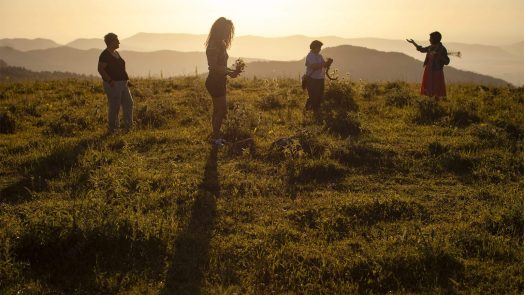
As the mountainous ribs of southern Siberia, the republic of Tuva breathes with a culture of inherent symbiosis. The expansive region rests at the true heart of Central Asia, brushed by the ancient carcass of the Sayan Mountains that rumble alongside the eastern steppe, the rigid Altai peaks that hover over winding plateaus to the west, and the Mongolian border to the south. At this intersection of Asian lands and traditionally semi-nomadic cultures, a legendary form of music continues to cultivate creative expression, spirituality, and, through adaptation, modern experimentation.

The music of any region is the skin of its culture. Its texture, wrinkles, and colors stretch over flesh, bone, and spirit. Within the open palm of Central Asia, Tuva holds a musical tradition that has been quietly capturing the imagination of the world and which is among the most awe-inspiring vocal arts to have persisted to this day. Also known as overtone singing, and colloquially as khoomei, throat singing is a style of vocal performance that allows a singer to deliver two or more notes simultaneously, while the pitch is naturally controlled by the lips and throat. Overtone singing can be heard in many cultures: for instance, in some isolated regions in Canada’s Arctic; within the Xhosa communities of South Africa; among the Chukchi; and in the memory of the Ainu art of Rekuhkara. Tuva’s throat singing, however, is unlike any other in the world.

Jump to:
1.  From the Lungs of Central Asia
2.  Between Political and Folk Narrative
3.  Transcending Place
4.  Music as the Frequency of Spiritual Experience
5.  Continuing Exploration and Growth


Alash River, Tuva Republic. Photography by Konstantin Mikhailov

“For Tuvans, I would say, khoomei expresses thought within the field of sound. And that is why, for the majority of Tuvans — even those who do not sing but only listen — it evokes associations with the sounds of nature, while for the performers, as they sing, it would be native lands, mountains, steppe, taiga, and so on.” - Choduraa Tumat, Tyva Kyzy

“Но у тувинцев, я бы сказала, хоомей выражается как мышление в звуковом пространстве. И поэтому у большинства тувинцев, даже у тех кто не поет а только слушает, при слушании возникает ассоциация со свуками природы. А у самих исполнителей при пении явная визуализация природы: родные места, горы, степь, тайга и т.д.” - Чодураа Тумат, Тыва Кызы


Forgotten Gems & Dusty Classics: Mississippi Joe Callicott, Fred Neil, Bix Beiderbecke, Oscar Aleman, Karen Dalton

Amassing rare and forgotten music is a peculiar sort of hobby — one that slowly transforms into an addiction. It’s not that I don’t love mainstream music. It’s just that the thrill of listening to some forgotten gem that everybody else has overlooked is powerful. It also feeds into the collector’s impulse I have to overturn every stone to find that song, and my love of complete collections. Not surprisingly, I also like to collect comic books. I guess I’m the type. In any event, here are five lesser-known musicians that I believe everybody should give a listen to, dating as far back as the 1920s and focusing on jazz, folk, and blues.

Mississippi Joe Callicott (1899 – 1969)

Callicott was not your typical North Mississippi blues musician. Musicians from the hill country tend to vamp on a few chords, focusing on a droning, almost hypnotic sound; Callicott was a fingerpicker in the vein of a Piedmont guitarist, with a dash of Jimmie Rodgers. He recorded three songs independently in 1929 and 1930: “Fare Thee Well Blues,” “Traveling Mama,” and “Mississippi Boll Weevil Blues”, the last of which went unreleased. Two additional tracks were recorded with Garfield Akers, the “Cottonfield Blues” — and here, his finger picking is energetic and nimble, bordering on aggressive.1

After the 1930 session, he went unrecorded for 37 years. He was not totally forgotten, however, as his songs started to appear in anthologies of Delta Blues. He was eventually found in Nesbit, Mississippi by George Mitchell, who recorded several songs with him in August 1967. These became the basis for a number of records and re-releases, the best of which was probably Fat Possum’s Ain’t a Gonna Lie to You. Unfortunately, his guitar playing had diminished somewhat by this time, but his voice had matured beautifully. His singing on “Frankie and Albert” is expressive and full of sadness yet was beautiful and nuanced throughout. After these sessions, he recorded several songs for Blue Horizons which were a bit lower-quality and rougher. He died in 1969 and was only recently given a proper headstone.

Purchase Mississippi Joe Callicott Albums On Amazon

Mississippi Joe Callicott – “Cottonfield Blues”DOWNLOAD MP3

Audio clip: Adobe Flash Player (version 9 or above) is required to play this audio clip. Download the latest version here. You also need to have JavaScript enabled in your browser.

Mississippi Joe Callicott – “Frankie And Albert”DOWNLOAD MP3

Audio clip: Adobe Flash Player (version 9 or above) is required to play this audio clip. Download the latest version here. You also need to have JavaScript enabled in your browser.


Seattle International Film Festival (SIFF) 2013 Preview: Films We’re Looking At Potentially Being Excited About

Due the unfortunate fact that we are merely human and Seattle International Film Festival (SIFF) is just beginning its three-week film rampage, we’ve sifted through the Festival’s gigantic catalog to come up with the best films of the bunch — or so we suspect. SIFF is annually guaranteed to have a mixture of some of the best and worst films that one can see — and these film recommendations come from the minds of three REDEFINE writers with good intentions. Yet at best, these selections are our most educated hypotheses, determined from a mixture of film industry knowledge and intuitions based on trailers.

On the right, we’ve grouped our selections for 2013 by world region.

Stay tuned in the weeks to come, as we offer updates throughout the festival’s progression, with general thumbs up and thumbs down summaries of the films we will painfully and enjoyably slog and float through, as well as one-off full-length reviews. Happy SIFFing!

Barn Owl Band Interview: A Bilateral Reflection On Meditative States

In Hinduism, there is a term called Shaktipat, in which a guru transmits enlightenment by their very presence. Considering the places that some of us here at REDEFINE Magazine have voyaged to while listening to the music of Jon Porras and Evan Caminiti, solo musicians who are also collectively known as Barn Owl, we decided to harangue the duo with a bunch of questions about meditation, to see how much they had seen in such altered spaces.

Barn Owl’s music seems custom-made for the sweat lodge or meditation hall. As you listen to an amalgam of tribal percussion, temple bells, cosmic synths, and rustic American transcendentalism, you can practically smell the sweet sage burning. Their music knows no bounds, and as such, is a ritual that everybody can take part in.

As increasing amounts of people and culture make demands on our time and attention, the ability to find a quiet, sacred space becomes essential. Barn Owl’s portable ashram is a precious resource — you can strap on a pair of headphones and find some space on a crowded train or a busy street to reflect. They encourage us to slow down, and find a little peace.

Barn Owl’s latest full-length album, V, is out now on Thrill Jockey Records.
PURCHASE BARN OWL’s V ON AMAZON

PHOTOGRAPHY BY ANTHONY MASTERS; ABOVE ARTWORK BY EMILY FRASER

Jon Porras

“Into Midnight” from Black Mesa

Evan Caminiti

“Fading Dawn” from Dreamless Sleep

Barn Owl

“Void Redux” from V

Barn Owl’s music has a way of slowing down attention, slowing down one’s perception of time. Meditation produces a similar result. What are your intentions with putting music out into the world? Are they aligned with such qualities?

Jon Porras: Especially in the Bay Area, I feel myself trying to slow down in the wake of a fast paced, technology-based culture. Maybe this desire to slow down comes out subconsciously in our work. We’ve always gravitated toward music that builds slowly and thoughtfully, and I believe it can be powerful to feel big impact from subtle shifts in tone, volume and texture.


Evan Caminiti: I approach music less conceptually than I once did and rely more on intuition and daily practice, embracing the strong moments of improvisation rather than trying over and over again to execute an idea based on concepts that don’t resonate viscerally. Having a specific vision and knowing what we want to hear is crucial; I would say we always make the kind of music we would to listen to. I think slow music, deep music that taps into something beyond just entertainment, music that engages your body and mind in an all encompassing way — that is really valuable and crucial. Personally, it is a major part of my well-being, and I hope through releasing music that it does the same for others. I find it to have a grounding effect, both energizing and calming.


Saya Woolfalk Artist Interview: The Possibility Of All Kinds Of Mixing

To experience Saya Woolfalk’s work is to become immersed in a scientific folklore where biology and anthropology inform fables of utopia. In Greek, “utopia” translates literally as “no” (ou) and “place” (topos), and in a collaborative series with anthropologist Rachel Lears, entitled No Place, Woolfalk posits ways in which “no placeians” can more readily become a part of a utopian society.

In her most recent development upon this theme, Woolfalk has incorporated a new element — that of dual consciousness and foreign beings, via the narrative of a fictional species called Empathics. Through the use of psychedelically-colored exhibits, scientific slide shows, dance performances, and a very multi-disciplinary artistic practice, Woolfalk is learning how to use art shows to create utopian worlds in and of themselves.


James Blake – Overgrown Album Review

James Blake
Overgrown (2013)
Universal Republic

Few artists are as conscious of their position in the music industry as James Blake. Seemingly spawned from the hype of music blogs and the irresistible “Limit To Your Love” cover which made him famous, Blake knows how volatile and fickle the wicked cycle of fame can be. But such awareness is not necessarily a bad thing; in fact, it is what has driven him to be successful even when the situation was unfair. At the time of his debut album — a record which he was pressured to piece together by his record label — Blake felt cheated out of the ability to craft an album he could truly call his own. On Overgrown, however, Blake has crafted a world all his own. And it’s as beautiful as anything he has ever created before.

In setting the scene, it’s important to note the kind of relationship(s) Blake has been in since his bedroom producer days. Much has already been made of his long term relationship with Warpaint guitarist Theresa Wayman, but it’s an important development that even Blake has admitted to be an influence on Overgrown. In a recent Guardian interview, when asked about being in love and if it affected his process, Blake responded, “Yeah, it did. And the uncertainty also did. The uncertainty of the nature of the relationship. The uncertainty of touring. The uncertainty of the music industry, and the uncertainty of my position in it.” It’s an important shift in lifestyle that bears its weight on the whole of Overgrown, a record more grounded in soulful, downtempo electronica than the booming stretch of dubstep EPs he began his career making. Be it the sound itself or the record’s lyrical content, Overgrown is the natural evolution of a brilliant artist in his early twenties.


Amanda Charchian Artist Interview: Saying YES To Raw Honesty

Whether it’s a symptom of repressive cultural conditions or a question of derivative creativity, nudity in art causes a ruckus. Rashly criticized as an easy way to draw attention to one’s art or an exhibitionist ploy for attention, bare bodies are often a point of contention for both critics and viewers alike. The fine line between artistry and exploitative eroticism is often a blurry one. Ultimately, the intentions of the artist and the emotional subtleties communicated by the work itself determine its merit or lack there of.

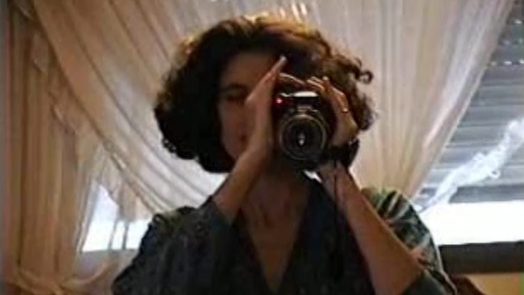
In the case of 23-year old Amanda Charchian’s photography, revelation is the goal. It is a desire to construct timelessness that inspires her to photograph nudes. She favors skin over clothes because of its raw honesty, the removal of clothing a path to seeing ourselves in our purest most vulnerable forms.

(18 IMAGES AND 1 VIDEO IN FULL POST)

“I appear defiant because I have something to rebel against, something to be resistant to. Every artist I admire has something to say, to instigate, a passion to ignite.” – Amanda Charchian


Shy Boys Fly Girls K-Pop Mixtape (#24) + “Fantastic Baby”, A Music Video Screening and Panel Discussion

Holocene and Redefine Magazine present….

FANTASTIC BABY: The Opulent Kingdom of Contemporary K-Pop

Fantastic Baby

A selection of music videos and discussion panel, as part of the ongoing SOUND & VISION series at Hollywood Theatre.

Monday June 3rd, 2013 @ 7:30pm
RSVP ON FACEBOOK

Panelists:
Allen Huang (J/K Pop! – Seattle / SSG Music)
Ingmar Carlson (Shy Girls)
Reese Umbaugh (J/K Pop! – Seattle)
Jordan Becke (J/K Pop! – Seattle)

Moderators:
Gina Altamura (Holocene)
Vivian Hua (REDEFINE magazine)

+ DJ Initial P

We’ll be screening delectable eye candy in the form of music videos from BIGBANG, Shinee, 2NE1, EXO, Girls’ Generation and more!

Topics of discussion:
* Repeated motifs and common techniques in filming contemporary K-pop videos: a technical analysis
* Strength In Numbers: the rise of colossally sized K-pop idol groups with 10+ members
* Eroding social conservatism and subverting gender norms in Korean culture through pop music and imagery

Shy Boys Fly Girls K-Pop Mixtape Stream & Download


With PSY having achieved billionaire/Bieber-destroyer status just in time for the holidays, here’s a mix of not-so-Gangnam s(e)oul jams to recap 2012 and usher in the new year. These aren’t quite for the club; they’re more for staying in — with your boo, or just you — and making it through the rest of the winter. And you’d better make it, because 2013 is gonna be the Year of the K-Dragon. (Silly rabbit, snakes are for planes.)

Curated by Ingmar Carlson of Shy Girls

Editor’s Note: Given the valued aesthetics of the K-Pop industry, each of these tracks is paired not only with a track and MP3, but a killer music video as well. Enjoy.

CONSTRUCTIVE GROWTH THRU ARTS JOURNALISM
About / Contact -- Contributors -- REDEFINE Events -- Submissions

Copyright © REDEFINE Media LLC 2013